
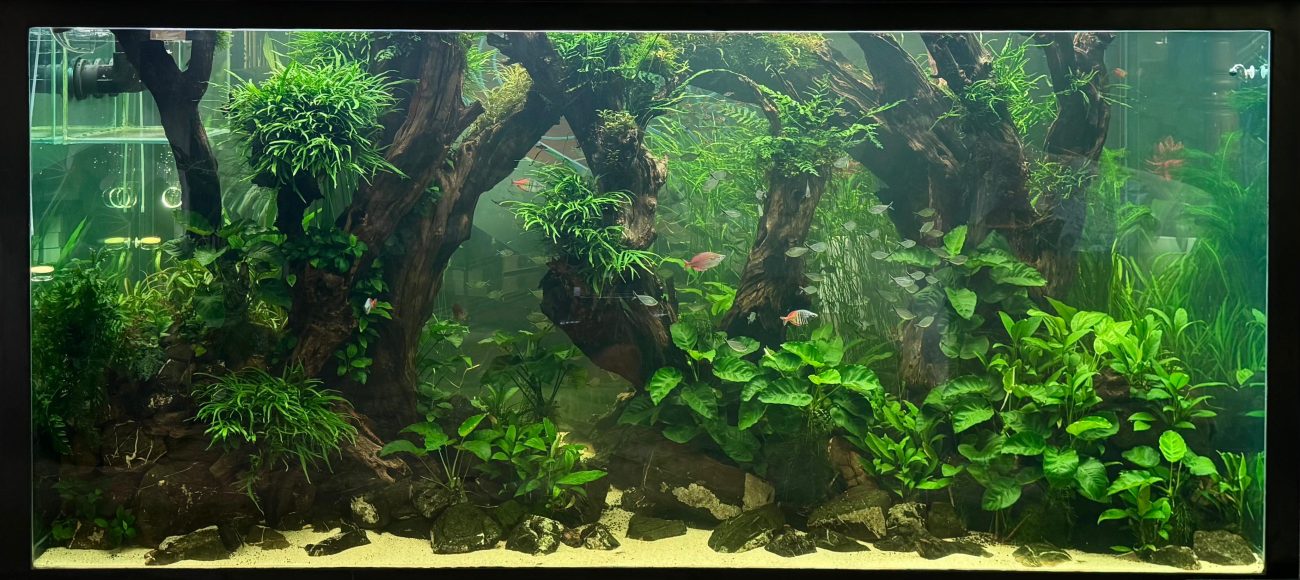
In the world of interior design and architecture, few elements have the power to transform a space as completely as a thoughtfully designed aquascape. Trinity is one such creation — not merely an aquarium, but a living, breathing work of art that reshapes the atmosphere of the home around it.
Among all the aquascapes I have created so far, Trinity stands out as one of the most meaningful and complete. Much of its success comes from the client’s deep appreciation for nature and underwater plant life. That shared vision made it possible to create something truly immersive — a space where design, stillness, and the beauty of the natural world come together in perfect balance.
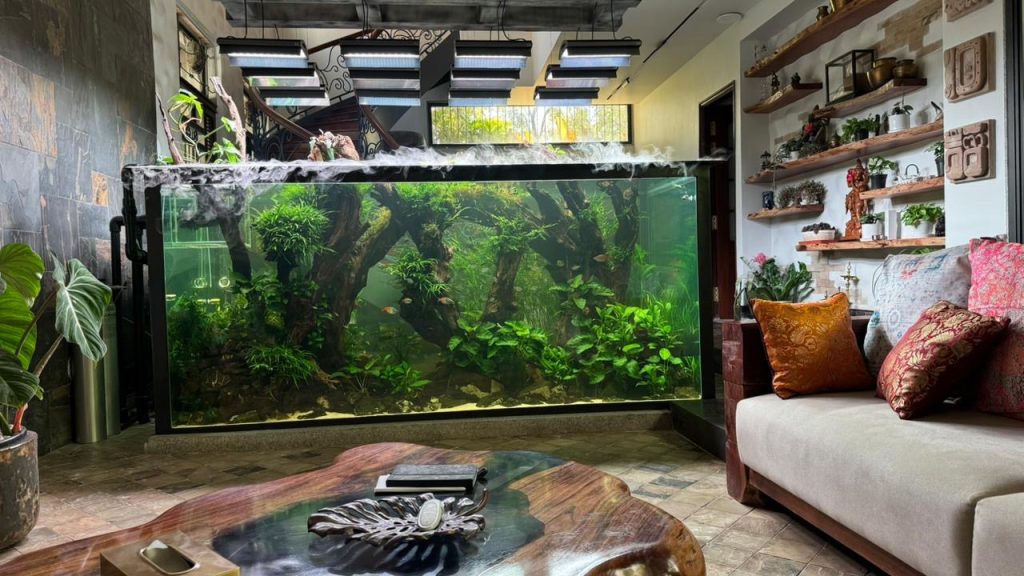
What makes Trinity extraordinary is not just its scale, but the feeling it evokes. Sitting in front of this aquarium creates a rare sense of timelessness. The longer you observe it, the more the outside world seems to disappear. There is a quiet, meditative quality to it — as though you are no longer looking at an aquascape, but have entered the river itself. The movement of the fish, the gentle sway of aquatic plants, and the subtle rhythm of flowing water create an atmosphere of deep calm and introspection.
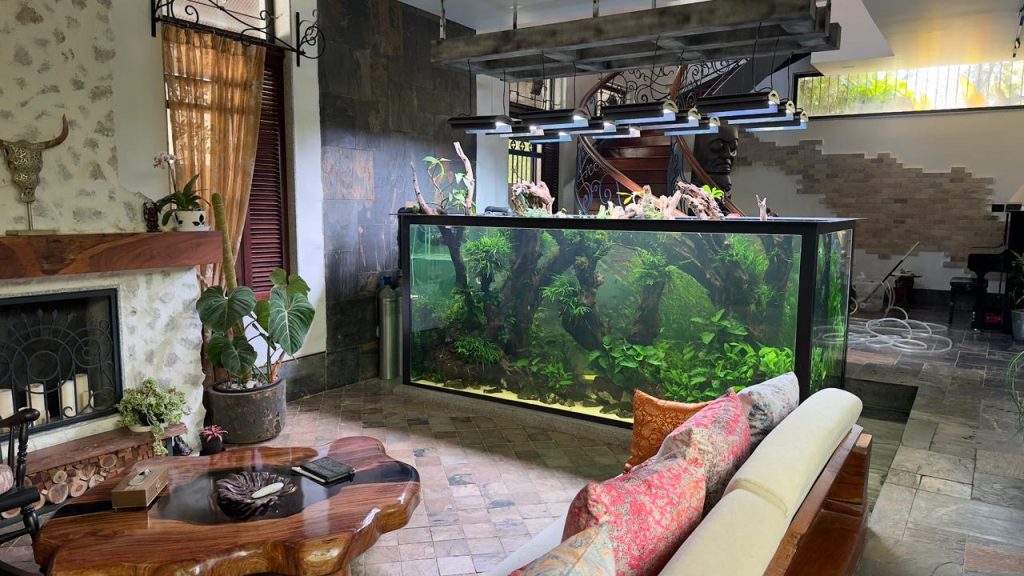
For interior designers and architects, this is where aquascaping becomes especially relevant. A project like Trinity is far more than a decorative installation. It functions as a spatial anchor, a biophilic design feature, and a living focal point that changes the emotional character of a room. In this home, the aquarium is positioned centrally, allowing it to define the living space in a way a television or static artwork never could. It becomes the heart of the interior — engaging, dynamic, and deeply restorative.
The aquarium holds 5,000 litres of water and measures 300 cm x 150 cm x 150 cm. Its proportions give it an architectural presence, allowing it to act almost as a transparent partition of nature within the home. Rather than simply occupying space, it shapes the experience of space. It invites pause, conversation, and contemplation. People of all ages are drawn to it instinctively.
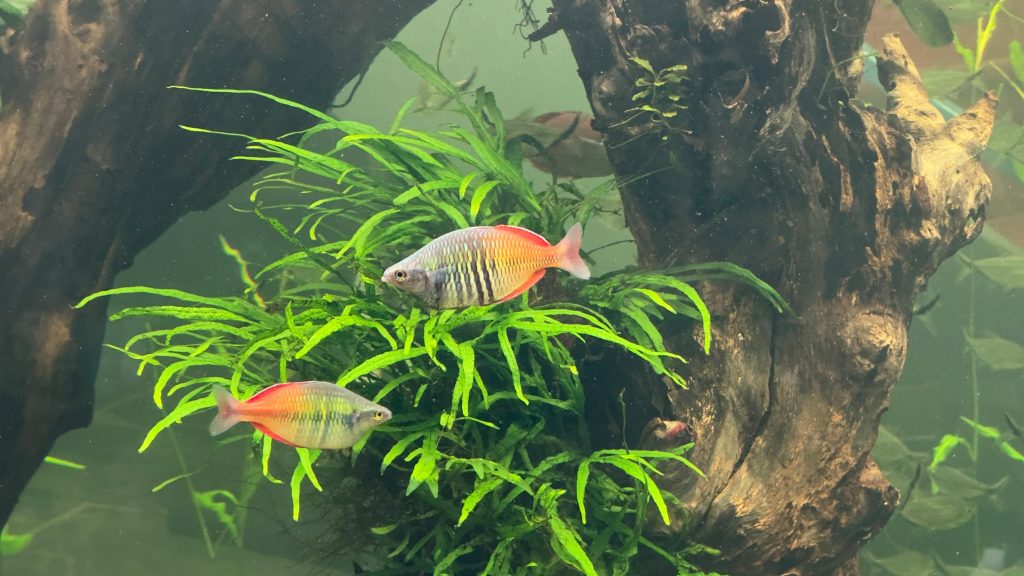
The aquascape itself is composed with an emphasis on natural flow and harmony. Driftwood is intricately intertwined throughout the layout, guiding the movement of the fish and giving the composition both structure and softness. As the fish weave their way through the wood and current, their motion feels almost choreographed — graceful, fluid, and musical in a way that cannot be heard, only felt. Even the calm temperament of the fish adds to the experience, reinforcing the sense of serenity that defines the entire installation.
What I admire most about Trinity is its emotional honesty. Of all the aquascapes I have built over the years, this is one of the very few that makes me feel such a deep conviction about the essence of nature aquariums. It reminds me that aquascaping, at its best, is not just about composition or technique — it is about creating an emotional landscape. A place where the human mind can slow down, reconnect, and simply be.
Now, more than a year after its installation, Trinity continues to evolve beautifully. Like all living ecosystems, it grows richer with time. The plants mature, the textures deepen, and the composition develops new subtleties. That ongoing transformation is part of what makes a large-scale aquascape so compelling within a residential setting: it is never static. It lives with the home, and in many ways, becomes part of its soul.
For those in design and architecture, Trinity offers a powerful reminder that interiors need not be limited to furniture, finishes, and lighting alone. Nature, when integrated meaningfully, can become the most powerful design element of all.
Trinity is not just an aquarium. It is living art, a meditative presence, and an unforgettable spatial experience.
Leave a comment
You must be logged in to post a comment.